Alan Cumming on career success, how ‘The Traitors’ broke through
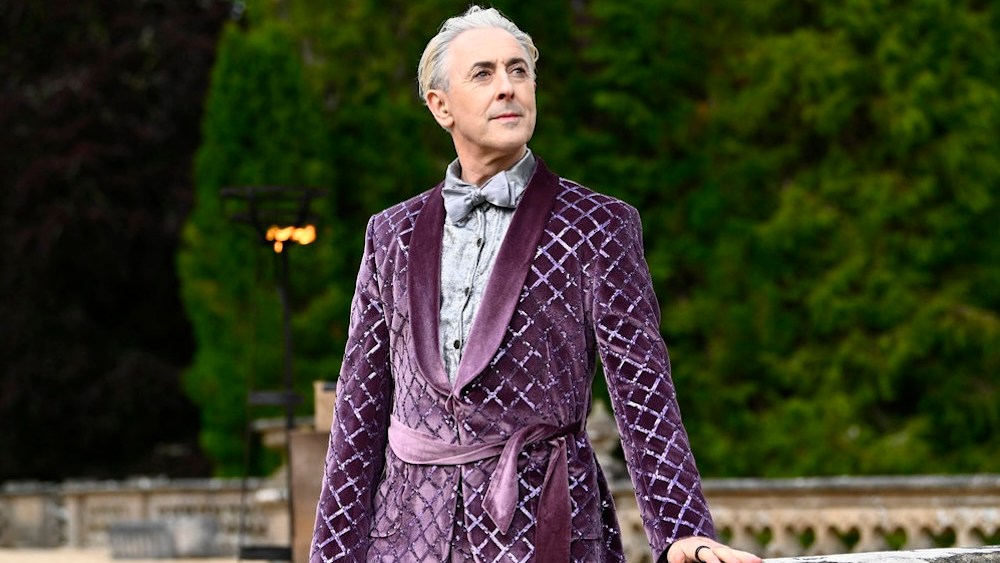
When it comes to accolades, Alan Cumming’s list is stacking up: a BAFTA Award, five Emmy Awards, two Tony Awards and an Olivier Award. And part of that is thanks to his method of choosing roles.
“I just do what I like. I really do,” he says. “I think the most important thing a success like ‘The Traitors’ has taught me is to give things a try. I’m willing to step outside my comfort zone or follow the career path that others think should be mine. I’ve always done that, actually, and if you look at my resume you’ll see that it’s pretty crazy and eclectic, but that really reflects my curiosity and willingness to try things. Life is a series of great adventures, and I love adventures.”
That daring method paid off; on January 8, Cumming will receive a star on the Hollywood Walk of Fame, an honor he calls “basically insane.”
“It’s so far outside my expected career path or even outside my mental periphery. I’m so grateful and somewhat shocked by it. But it’s really made me take stock and realize what an incredible journey I’ve had and how much I’ve been helped by so many people in Hollywood and America,” he says.
And for that reason, he’s inviting people he loves from many different stages of his career to attend — “including friends I first stayed with when I came here to look for work, my first agent, and friends I’ve made over the years,” Cumming explains.
“I think as you get older you realize that you are a product of everything that has happened to you: I owe so much to being Scottish in terms of my education and the opportunities I was given, and coming to America and having this incredible new range of opportunities has allowed me to live in an incredible way that I never thought possible.”
This journey began when Cumming was just a young boy attending primary school in Scotland, when a theater company performed a play at lunchtime.
“It completely changed my life,” he remembers. “I was fascinated and even though I didn’t really understand it as show business at the time, I knew that whatever they were doing, whatever magic they were weaving, I wanted to be able to do it. It wasn’t until many years later that I understood that you could be an actor and make a living at it.”
Cumming made his acting debut on British television in 1984, in theater in 1987 (starring in ‘Cabaret’, a show for which he would win his first Tony eleven years later) and got his first film role (‘Prague’) in 1992.
Getty Images
Eventually, he came to love both the show side and the business side of his career, especially because he was able to travel the world and have “incredibly intense and intimate experiences with artists and people I admire and realize that sometimes the work you do can make a difference in the lives of so many people.”
Although he is surrounded by support and there are people he greatly admires and respects, Cumming does not like “the concept of role models” in his own life.
“I think it’s dangerous to try to emulate people too closely, because by focusing on them you’re not actually fully exploring who you are and what you could potentially be,” he says. “So I guess the biggest role model is myself. I’ve always created my own idiosyncratic career path, I’ve been my own man, I’ve spoken out about what I think is right and I’ve found a life that makes me very happy doing all those things.”
Cumming wears so many hats — not just the berets and fedoras in “The Traitors.” He is a writer, producer, actor, singer and presenter; In fact, he will host the upcoming BAFTA Film Awards in February. He was also recently appointed Artistic Director of the Pitlochry Festival Theater in Scotland.
But don’t ask him to choose a favorite type of job.
“I think it’s a bit like choosing a favorite child,” he explains. “I always try to stay in the moment and think that what I’m working on right now is the most potentially fun and rewarding thing I’ve ever done, and I try to bring that same energy to everything I do.”
Yet the particularly challenging roles stand out – most notably ‘Cabaret’ on Broadway in 1998, ‘Bent’ in the West End in 2006 and a ‘grueling’ 2012 production of ‘Macbeth’ in which he played every character.
“The physical challenges and the fact that you have to keep doing it night after night really ingrains them more deeply into your psyche, I think,” says Cumming. “But there are also many film and TV roles that I have found incredibly rewarding, especially because they have had such a big effect on the audience.”
The examples he cites are Fegan Floop in 2001’s Spy Kids and Billie Blaikie in six episodes of 2006’s The L Word.
“They’ve stayed with people, molded them in some way and exposed them to things they didn’t know before,” he says. “That is the power of movies and TV: its reach and its potential to educate and transform.”

Season 3 winners of The Traitors with Alan Cumming
Thanks to Euan Cherry/Peacock
In 2023, the power of TV became even more apparent. Cumming began hosting and producing Peacock’s ‘The Traitors’. The series quickly became an award winner and broke into the tough reality competition program category at the Emmys. Cumming has now won the host trophy two years in a row, and in 2025 the show took home all five Emmys he was nominated for.
“I think the premise of the game – that the audience knows right away who the bad guys are – means moving away from the usual guessing game of whodunnit and focusing more on observing people under stress and how they cope with sometimes having to do things they don’t like or aren’t very good at,” says Cumming of the show’s ability to break through and stand out. “We all lie, but we don’t always see people doing it.”
He also appreciates the series’ production values, the immersive audience experience and the campiness of the series, which he says “really captures people’s imaginations” in a new way.
“It’s clearly something they need right now,” Cumming said. “We live in very frightening and oppressive times, and I think so too [the fact] that people have embraced a show that so fully embraces a queer aesthetic is deeply satisfying.