Teen founders raise $6M to reinvent pesticides using AI — and convince Paul Graham to join in
Two teenage founders walked into Y Combinator co-founder Paul Graham’s backyard with an idea that no one in agriculture seemed to want: an AI model to help design better pesticides. By the time they left, they had a new business model, a new company, and ultimately the support of Graham.
Now, that reimagined company – Bindwell – has raised $6 million in a seed round co-led by General Catalyst and A Capital, with a personal check from Graham himself. Instead of selling AI tools to legacy agrochemical giants, the startup is using its own models to design new pesticide molecules in-house and license the intellectual property directly — a shift in strategy aimed at modernizing an old industry still dominated by decades-old chemistry.
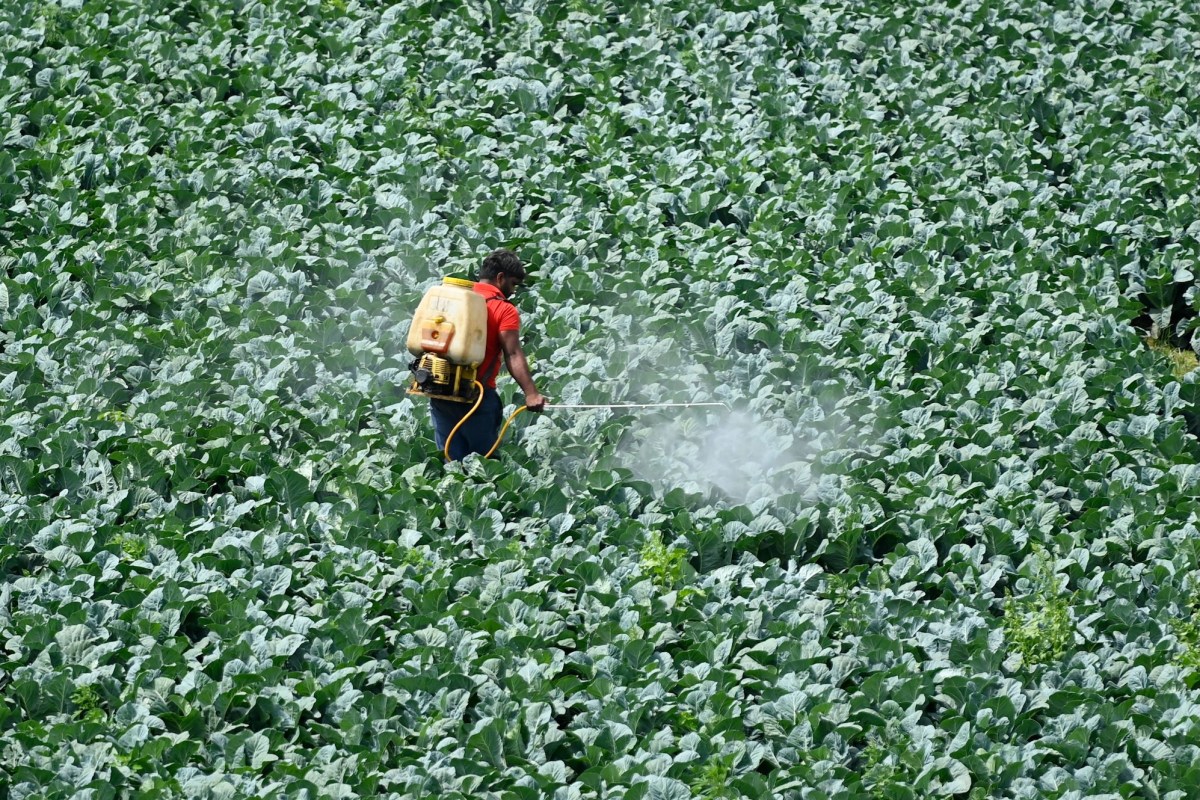
The use of pesticides in agriculture has doubled in the past three decadesuntil 40% of global crop production According to the Food and Agriculture Organization of the United Nations, it is still lost every year to pests and diseases. As pests evolve and develop resistance, farmers are forced to use increasing amounts of chemicals to maintain the same yields – a cycle that damages ecosystems and accelerates resistance even further. Regulatory pressure is increasing, but most agrochemical companies still rely on adapting existing compounds. Bindwell is betting that AI can break the cycle by discovering entirely new, more targeted molecules – molecules designed from the ground up for modern challenges.
Founded in 2024 by Tyler Rose, 18, and Navvye Anand, 19, Bindwell is adapting AI-led drug discovery techniques to agriculture, with the aim of accelerating the way new pesticide molecules are identified and tested.
Bindwell began as a research project in late 2023, when Rose and Anand were students in the Wolfram Summer Research Program. They initially focused on an AI drug discovery model called PLAPT that involved predicting binding affinity – work later cited in a Nature Scientific Reports article on cancer therapies. In 2024, they began investigating how the same approach could be applied to pesticides.
Both founders had personally encountered the problem. Rose learned about the challenges of pest control from his aunt, who farms in China. Anand’s family owns farmland in Delhi, where he saw firsthand how limited pesticide options affected crop yields.
“Agriculture has always been on our minds,” Rose said in an interview. “That led to the realization that we can use the exact same technology that has been successful in drug discovery. We can transfer that to pesticide discovery, because the biochemistry is the same, but pesticides are such a big problem, and I feel like most people don’t focus on them very much.”
WAN event
San Francisco
|
October 13-15, 2026

Rose and Anand entered Y Combinator’s Winter 2025 batch with plans to build AI models and sell their access to major agrochemical companies. But they didn’t find traction: Most industry players were reluctant to adopt AI as a core part of pesticide discovery. Halfway through the program, they were invited to Paul Graham’s home, where they spoke with him for about 45 minutes on the back patio.
After hearing about their challenges, Graham suggested a different approach: instead of selling tools, they could use their own models to discover new pesticide molecules on their own. That conversation marked the beginning of Bindwell’s current course.
“The founders [of Bindwell] will probably do well,” he said later posted about X. “They are smart and have a good idea.”
Bindwell has developed its own AI suite to reduce hallucinations – a common problem where models produce unreliable or unsupported results. The software includes Foldwell, a structure prediction model, a refined version of DeepMind’s AlphaFold, which is used to identify target protein structures. It also includes PLAPT, an open-source protein-ligand interaction model capable of scanning every known synthesized compound in less than six hours, and APPT, a protein-protein interaction model for biopesticide screening, which reportedly outperforms existing tools by 1.7x on the Affinity Benchmark v5.5. In addition, the suite includes an uncertainty quantification system that indicates when the results are reliable and when more data is needed.
“Since we don’t sell AI models, we don’t compete with companies that sell models,” Rose told TechCrunch.
Together, Bindwell’s models can analyze “billions” of molecules, the startup said, and deliver four times faster performance than DeepMind’s AlphaFold 3.
“The way most pesticides are discovered right now is not targeted,” Rose says. “Entomologists and chemists propose different compounds and then test them on insects. You often have to synthesize and test thousands of chemicals, which is expensive just to verify efficacy. With our AI models, you can simplify the problem to a single protein.”
The AI helps identify proteins that are unique to a specific pest but absent in humans, beneficial insects or aquatic organisms such as water fleas.
“Once you find those proteins, you can design something that binds to them and stops them working,” says Rose.
Bindwell is currently testing the efficacy of his AI-generated molecules in his laboratory in San Carlos. It is also working with a third-party partner to further validate the models, although Rose declined to share details.
Rose said the startup is in early discussions with several global agrochemical companies, and the first partnership agreement is expected to be finalized soon. “A year from now we want to enter into our licensing agreements with some of these companies,” he said. Bindwell has also initiated discussions with stakeholders in India and China to conduct field testing.
The startup currently has a team of four people and also works with external contractors for molecule synthesis.
Bindwell’s seed round also included the participation of SV Angel in addition to Graham. Before joining Y Combinator’s Winter 2025 batch, the startup raised a pre-seed round from Character Capital.