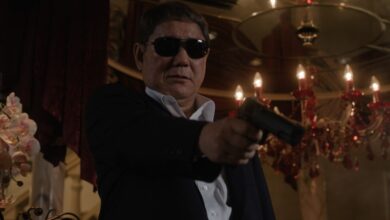
Okada Junichi and Fujii Michihito in Netflix’s ‘Last Samurai Standing’
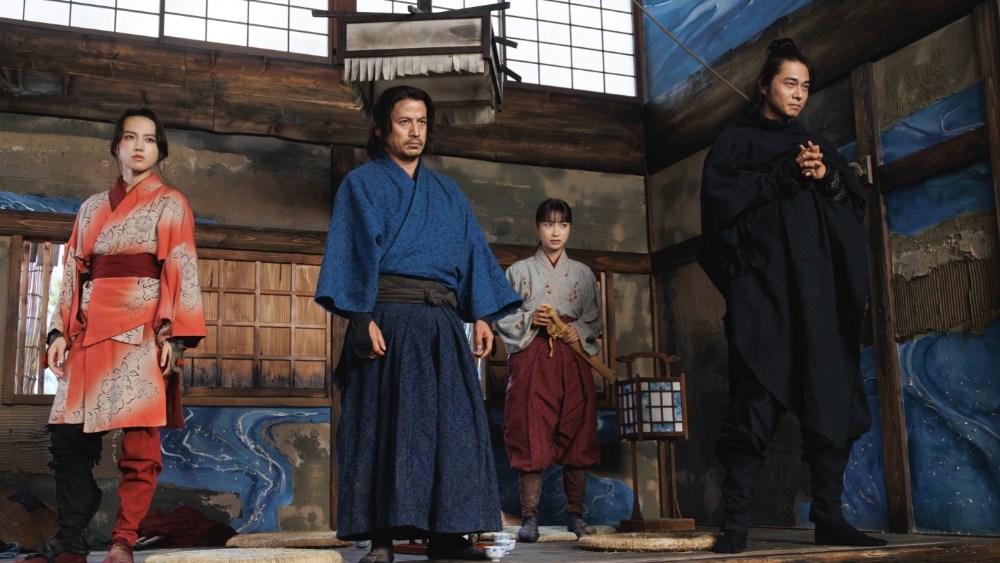
In 1878 the era of the samurai ended. Swords have been banned, the class system has crumbled and Japan’s warriors have become relics of a vanished era. Into this world steps ‘Last Samurai Standing’, Netflix’s most ambitious historical series yet in Japan – a riveting survival epic in which 292 former samurai are drawn into a deadly battle for a JPY100 billion prize and the chance to reclaim their honor.
Leading the project is Okada Junichi, who serves as star, producer and action choreographer. “It was extremely difficult,” he says Variety. “As an actor you have to be selfish. As a producer you think about budgets and logistics. That uses a completely different part of your brain. But when I read this script, I immediately knew: this is it.”
Okada’s character, Shujiro Saga, is a once-feared assassin who enters the brutal tournament known as Kodoku to save his ailing wife and child. The story begins at Tenryu-ji Temple in Kyoto, where 292 participants gather for the first battle: a large, nighttime battle staged without digital enhancement. “Every person on that battlefield was a cast member or part of the action team,” Okada says. “We filmed all night for days – it was exhausting but unforgettable.”
The series, based on the novel “Ikusagami” by Naoki Prize-winning author Imamura Shogo, reunites Okada with director Fujii Michihito after their collaboration on “Hard Days.” Fujii, known for his Japan Academy Prize-winning “Shoutai (Faceless),” brings grounded realism and emotional intensity to the large-scale action. “We believed that by infusing the story and action with the spirit and aesthetics unique to us as Japanese, we could resonate with viewers around the world,” he says.
The show comes at a time when global audiences are embracing ambitious Asian epics such as ‘Shogun’ and ‘Squid Game’. While Netflix Japan content head Sakamoto Kaata touted these titles when unveiling the slate, Okada emphasizes that this project stands alone. “I love both shows, and we are happy to be compared to such successful works,” he says. “But what is overwhelmingly different this time is that what we are making is an action drama set against the backdrop of stories from the Japanese period.”
Fujii sees the collapse of the samurai in the Meiji era as a metaphor for identity in transition. “Tradition survives through innovation,” he explains. “Our generation wanted to reinterpret the legacy of period drama with respect, but also with the energy to say, this is cool.” Okada adds, “I always wondered why historical dramas ended up being something only older generations watched. Over time, they became more about tradition than entertainment. Finding a human story that connects the past and present was the real challenge.”
Production designer Miyamori Yui introduced a recurring leaf-grain motif symbolizing fate and vulnerability that runs throughout the series, from ceremonial backdrops to costume textures. The cast includes Ito Hideaki, Ninomiya Kazunari, Yoshioka Riho, Kiyohara Kaya and rising newcomer Fujisaki Yumia. Acclaimed actor Hiroshi Abe (“Trick,” “I Wish,” “Godzilla 2000: Millennium”) joins the lineup as Gentosai Okabe – a towering, enigmatic figure with long white hair and an unsettling presence. Okabe is feared as a ‘monster’ by other participants and further disrupts the fragile balance of the game.
Shot on an unprecedented scale for a Japanese series, ‘Last Samurai Standing’ combines visceral swordplay realism with emotional storytelling. As Okada reflects, “When my character finally broke through Tenryu-ji, I felt like our long journey – both in the story and as filmmakers – had just begun.”
“Last Samurai Standing” premieres worldwide on Netflix on November 13.